A heritage rich in rhythm, flavour, and tradition.
Discover the traditions, stories, and experiences that connect Guyanese people across generations and across borders.
Experience Our Culture
Four threads run through everything we celebrate. Pull on any one of them and you find the same story: many peoples, one table.
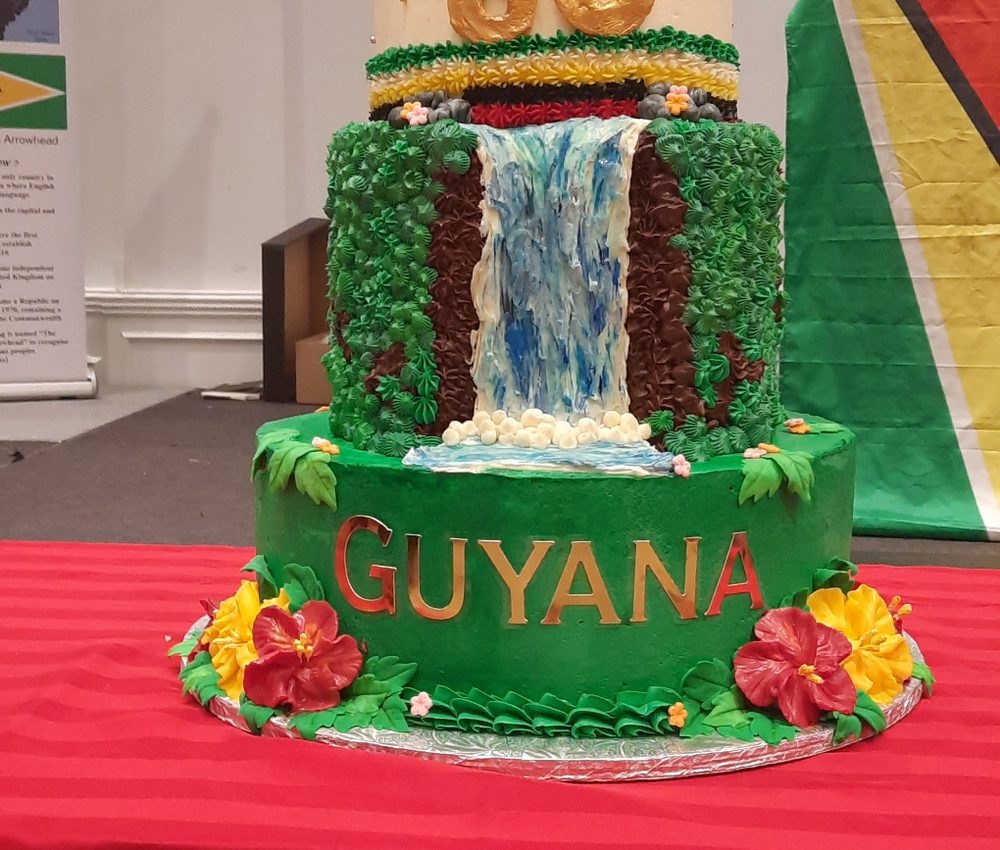
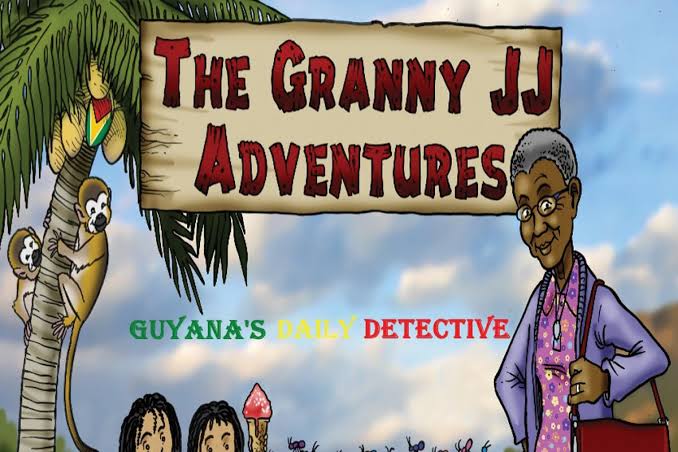
Six peoples, one nation.
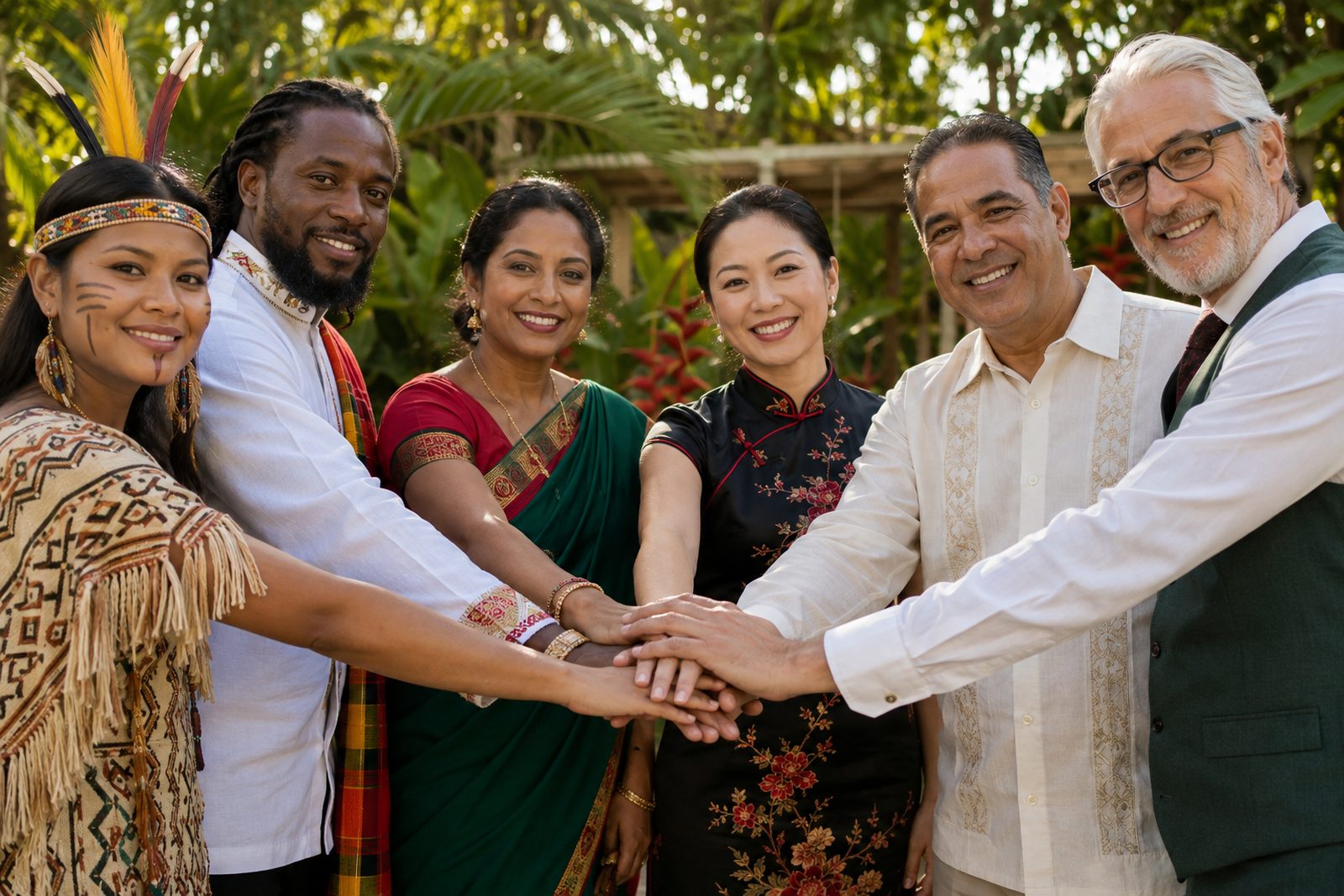
Guyana sits on the northern shoulder of South America, but its heart beats Caribbean. Its culture was built by Indigenous nations who have been there for millennia, by Africans brought in chains, by Indian and Chinese indentured labourers, by Portuguese from Madeira, and by Europeans — each arriving with their own food, faith, music and language.
What makes Guyana unusual is how thoroughly those traditions blended. A single Christmas table can carry an Indigenous stew, a Portuguese pork dish, and an Indian curry, and nobody thinks twice about it. That is what the national motto means in practice.
Every colour on the flag means something.
- Green — the forests and farmland that cover most of the country.
- Gold — mineral wealth, and the arrowhead of a nation moving forward.
- White — the rivers and waters that give Guyana its name.
- Black — the endurance that carries the nation forward.
- Red — the zeal and energy of the people building it.
The details worth knowing.
Pick a thread.
The table is the argument for the motto.
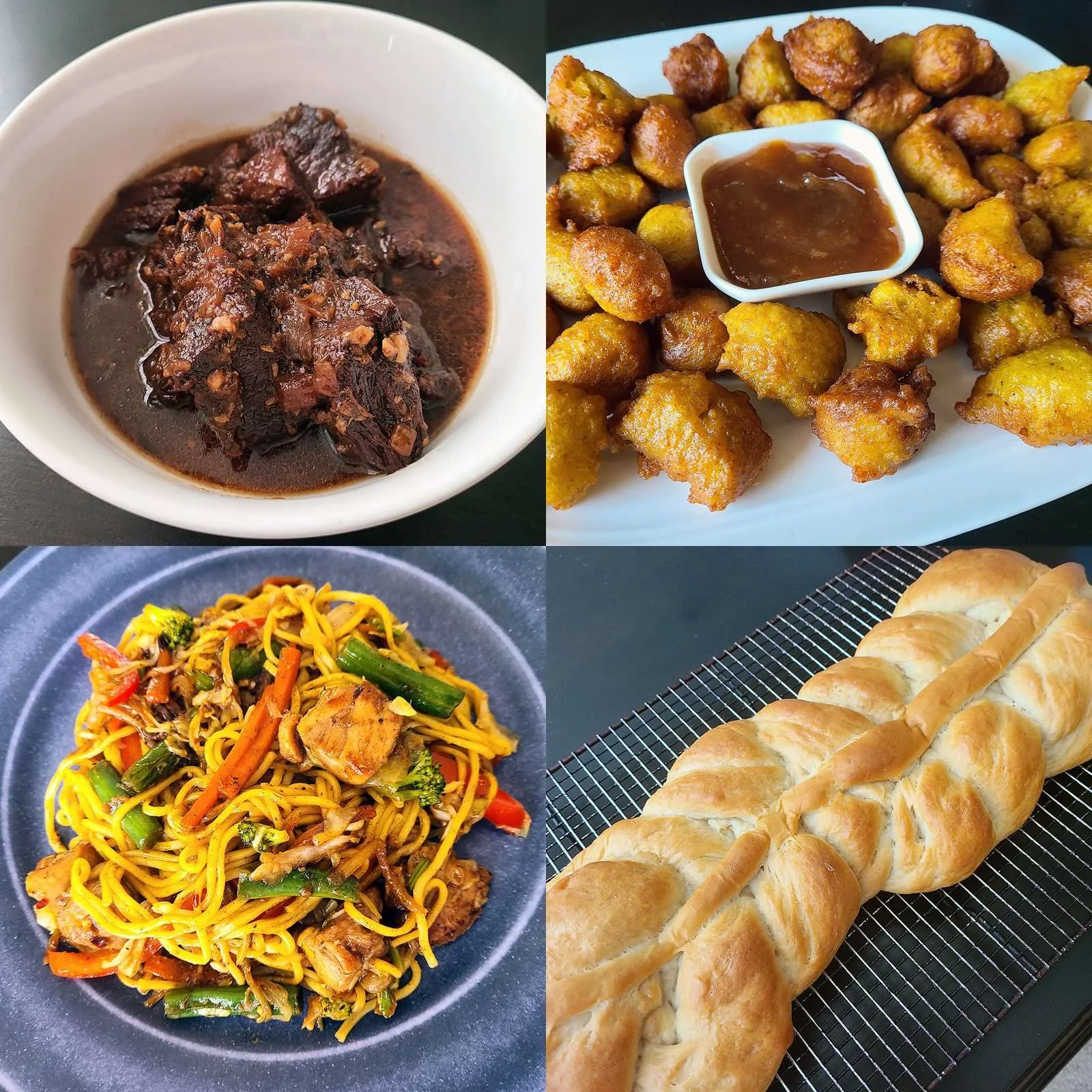
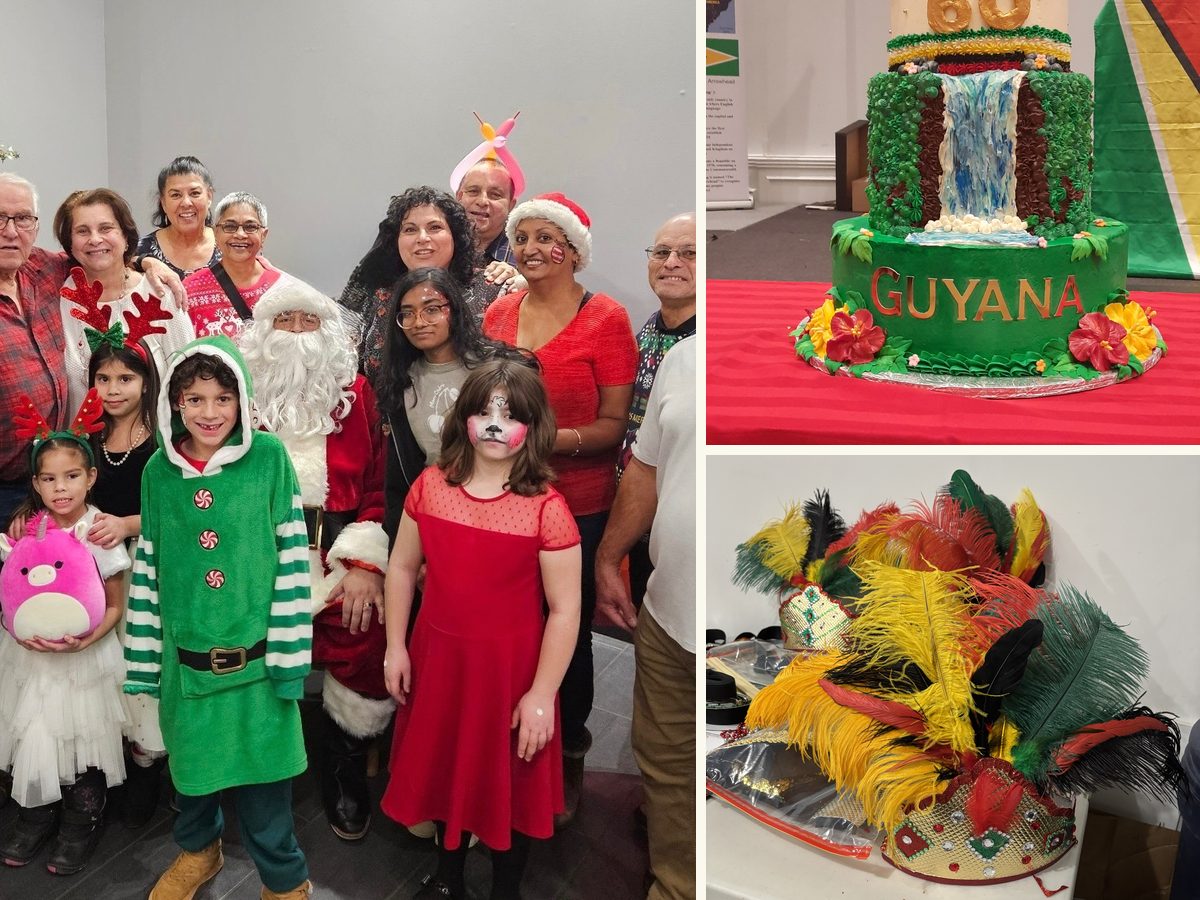
Pepperpot is the national dish and the clearest example of how Guyana works: an Indigenous stew preserved with cassareep, the boiled-down juice of bitter cassava, simmered low and eaten on Christmas morning with plait bread. It keeps for days on the stove and gets better each time it's reheated.
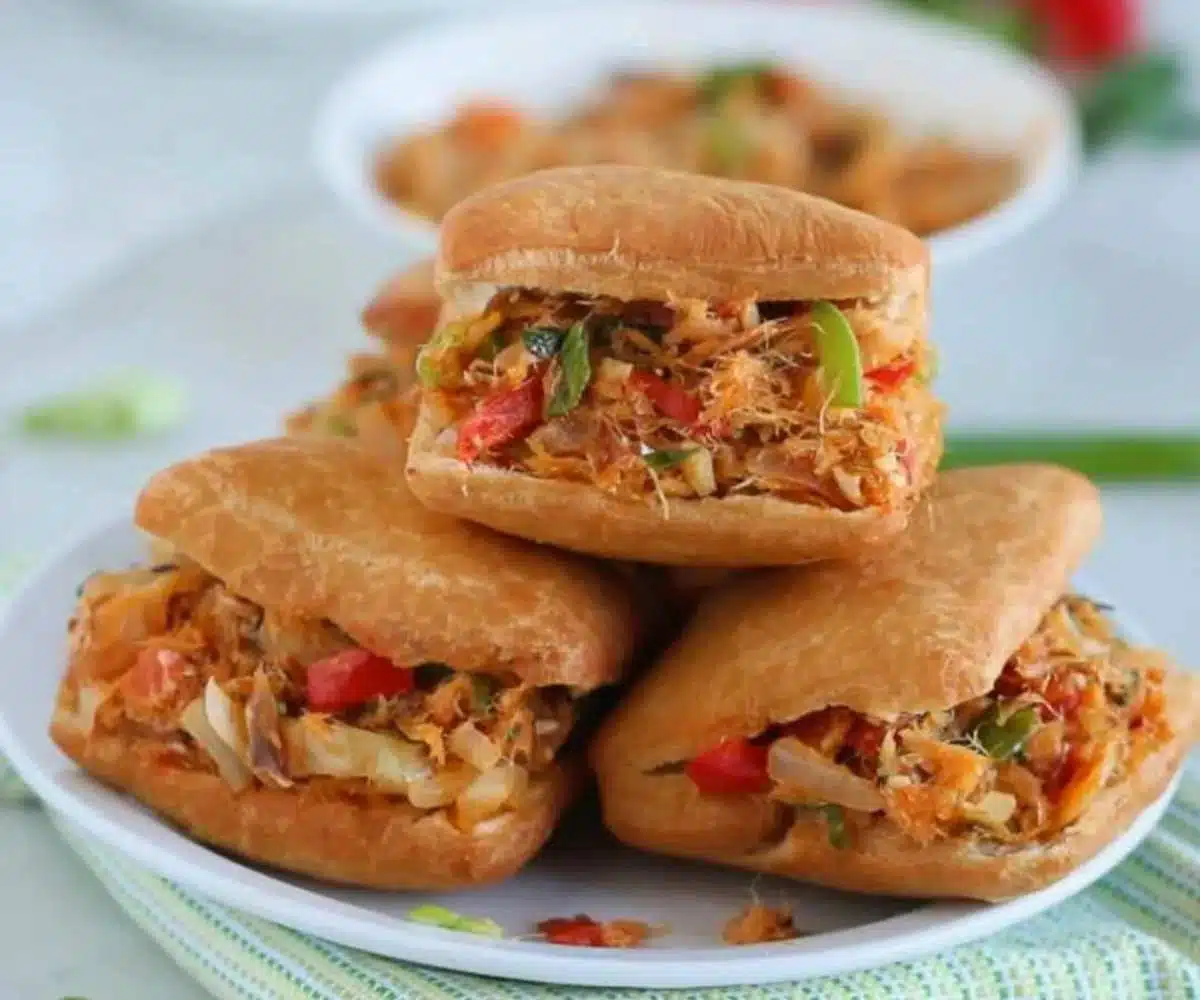
Cook-up rice is the everyday one — rice, peas, coconut milk and whatever meat is in the house, all in one pot. Metemgee brings ground provisions and dumplings together in coconut milk. Roti and curry arrived with Indian indentureship, garlic pork with the Portuguese, chow mein with the Chinese — and all of them now sit on the same holiday table.
Then there is the sweet end of things: black cake soaked in rum for months, pine tart, cheese roll, salara, and glasses of mauby, sorrel and homemade ginger beer.
If there's no music, it isn't a Guyanese event.
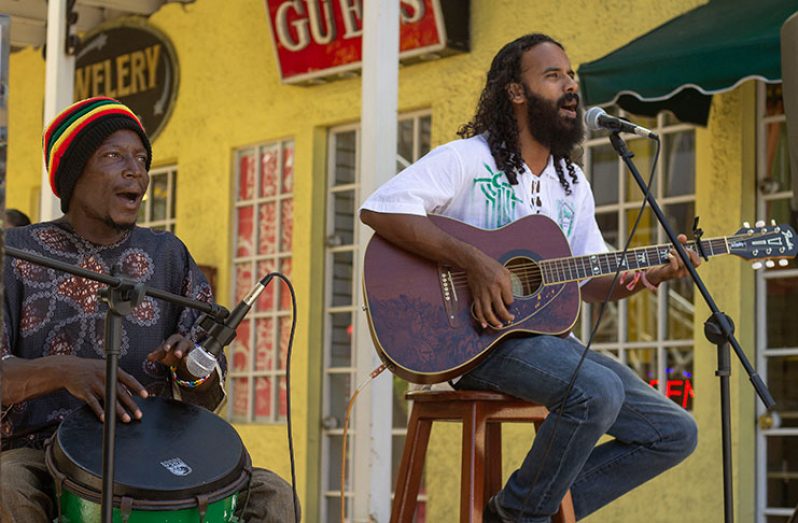
Calypso and soca carry the Caribbean side. Chutney — and its faster cousin chutney-soca — grew out of Indian folk singing meeting Caribbean rhythm, with the dholak and dhantal keeping time. Tassa drumming turns up at Hindu weddings and at Phagwah, loud enough to be heard three streets away.
The steelpan needs no introduction. Older traditions run underneath it all: queh-queh, the African-Guyanese pre-wedding night of call-and-response singing and dancing, and the Christmas masquerade bands that still move through the streets with flouncers, a stilt-walking figure and a drum-and-flute line that has been the same for generations.
At a GCCA night you'll hear all of it in one set, and the dance floor never argues about which came from where.
The calendar belongs to everybody.
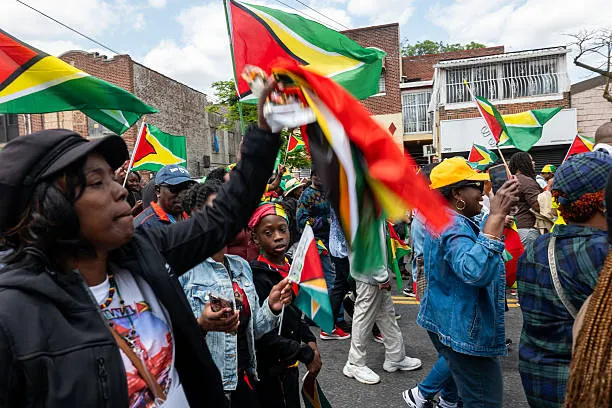
Mashramani, on 23 February, marks the day Guyana became a republic in 1970. The name comes from an Indigenous word for the celebration that follows cooperative work — which is exactly what it is: costume bands, float parades, calypso competitions and road march.
Independence Day on 26 May marks 1966, and is the date most of the diaspora rallies around. Phagwah (Holi) brings abeer powder and water in spring; Diwali lights rows of diyas and fills motorcades in autumn; Eid, Emancipation Day on 1 August, and Amerindian Heritage Month in September each carry their own traditions — and in Guyana, everybody turns up to everybody's celebration.
Christmas is its own season: curtains changed, house painted, pepperpot on the stove, masquerade in the street.
Creolese, folklore, and the things grandparents say.
Guyana is the only English-speaking country in South America, but the language people actually speak at home is Creolese — English-based, with African, Indian, Indigenous and Dutch words layered in. It's not broken English; it's its own grammar, and it's the fastest way for two Guyanese strangers to recognise each other in a Calgary grocery aisle.
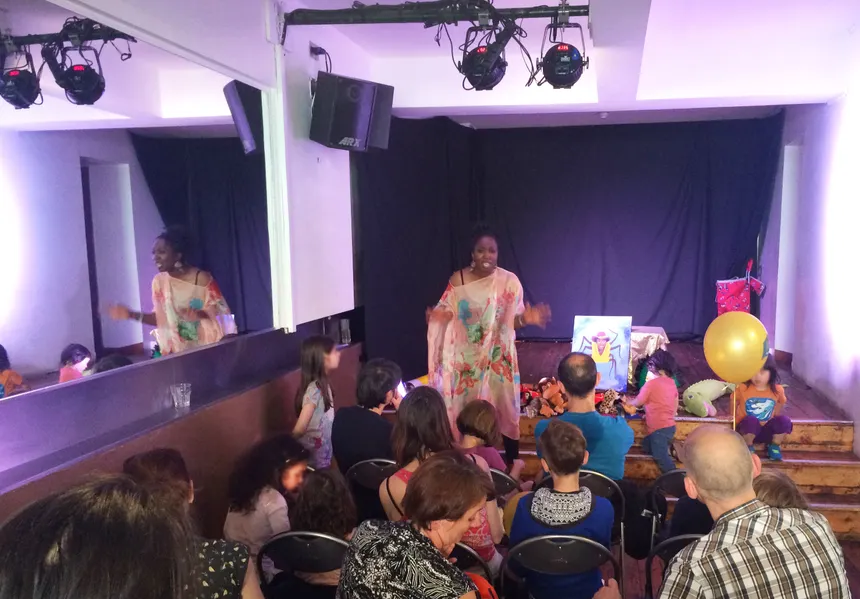
The folklore is just as durable. Ol' Higue, who sheds her skin at night. The Bacoo, a small trickster spirit kept in a bottle and fed bananas and milk. The Moongazer, impossibly tall, staring at the moon at a crossroads. Massacurraman in the river. These stories were told to keep children in at night, and they are still told for the pleasure of the telling.
Keeping that alive here — the language, the sayings, the stories — is a big part of why GCCA Calgary exists.
A little Creolese to get you started.
Say one of these at the next event and watch somebody's face light up.
Lime
To hang out with no particular agenda. The highest form of social activity.
Gaff
A long, easy conversation. "We gaff till midnight."
Banna
Friend, mate, buddy. Used constantly, affectionately.
Nyam
To eat, with West African roots. Usually said about eating well.
Small up yuhself
Budge over and make room — there's always space for one more.
Hard ears
Stubborn; won't listen. Most often said to children.
Eye-pass
A slight, or being disrespected to your face.
One one dutty build dam
Grain by grain, the dam gets built. Small efforts add up.
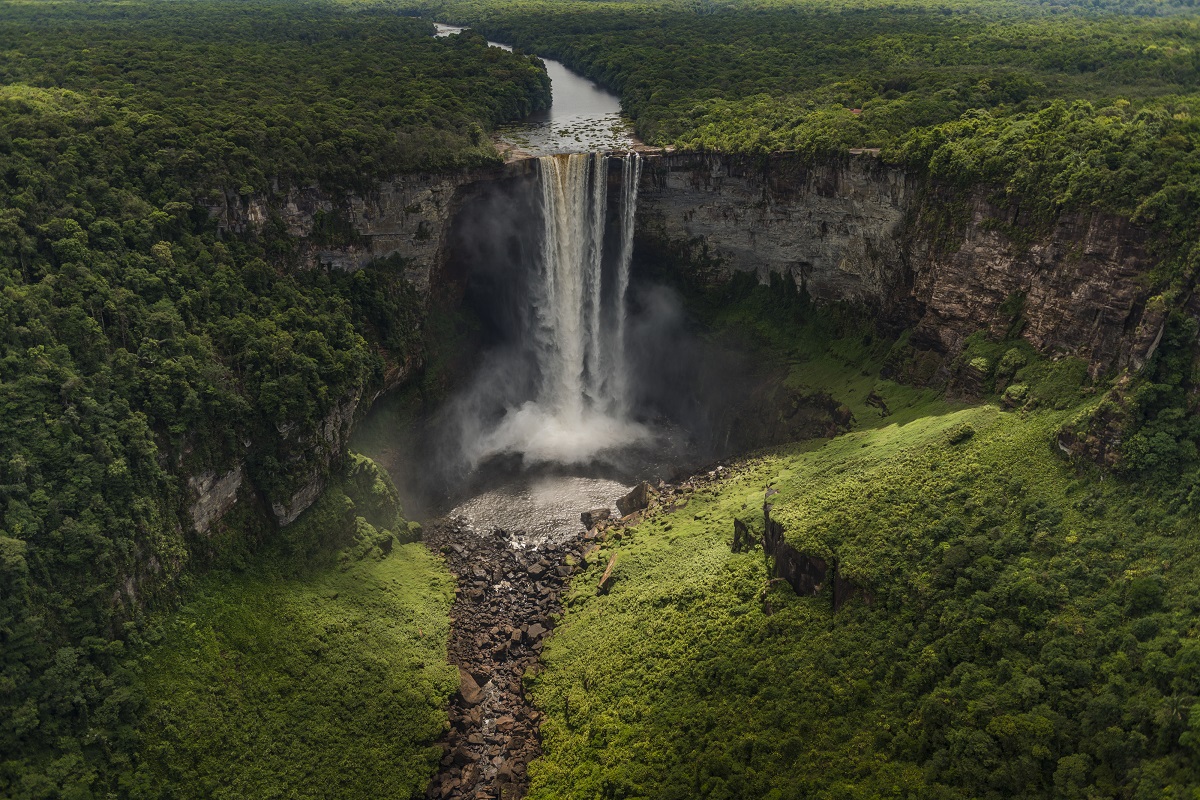
“One People, One Nation, One Destiny.”The national motto of Guyana
Come and taste it for yourself.
Reading about pepperpot is not the same as being handed a bowl of it. Our events are open to everyone in Calgary, whether your family is from Georgetown or you just want to know what all the fuss is about.